Skip to content
eFinanceManagement
  • Investment Decisions
  • Time Value of Money
    • Interest Rates
    • Compounding and Discounting
    • Annuity
  • Capital Budgeting
    • Techniques of Capital Budgeting
      • Net Present Value (NPV)
      • Internal Rate of Return (IRR)
      • Profitability Index (PI)
      • Payback Period (PBP)
      • Accounting Rate of Return
    • Capital Rationing
    • Real Options
  • Discount Rate
    • Cost of Capital
    • Cost of Equity
    • Cost of Debt
    • Cost of Preferreds
    • Weighted Average Cost of Capital (WACC)
  • Valuation
    • Equity Valuation
    • Bond Valuation
    • Firm Valuation
  • Risk-Return
    • Business Risk
    • Risk Measurement
    • Capital Asset Pricing Model (CAPM)
    • Portfolio Management
      • Portfolio Management Process
      • Types of Portfolio Management
      • Types of Investors
  • Explore More
    • Sources of Finance
      • Financial Leverage
    • Working Capital Financing
    • Investment Decisions
      • Corporate Restructuring
      • Mergers and Acquisitions
      • Dividend Decisions
    • Financial Analysis
      • Financial Accounting
      • Budgeting
      • Costing Terms
    • Financial Management
      • International Financial Management
      • Derivatives
      • Economics
      • Calculator
      • Books

Investment Decisions

Investment decisions are the decisions taken in respect of the big capital expenditure projects. Such expenditures may involve investment in plants and machinery, vehicles, etc. A common characteristic of such expenditures is that they involve a stream of cash inflows in the future and an initial cash outflow or a series of outflows.

Financial management is not only concerned with the sourcing of funds, effective utilization of such funds is equally important to successfully achieve the corporate objective of ‘wealth maximization. Effective utilization of funds can be achieved by investing them in productive activities or assets. Such decisions of selecting the right avenue of investment for a relatively longer term are called investment decisions.

Table of Contents
  1. Discounting Cash Flow Criteria
  2. Non-Discounting Cash Flow Criteria

Business assets can be broadly classified into two categories, namely short-term or current assets and long-term or fixed assets. Investment decisions are mainly concerned with the latter, i.e., fixed assets, which generally involve big cash flows and big initial capital investment. Investment decisions are also known as capital investment decisions because of the involvement of huge capital requirements.

Investment Decisions

A steel manufacturer was considering an investment in new plant and machinery, a service-oriented company was thinking of introducing new and improved organization-wide software, and a pharmaceutical company was thinking of buying patents for certain drugs. Such circumstances involve big investment decisions. A wrong decision can make things worse than one can expect at any of these stages. Such decisions are very long-term decisions and involve a huge investment of money, human resource, and other assets. So, it’s not a frequent situation for a business, and the right decision-making is very essential. Else, circumstances can be horrible for all concerned with them.

Now, the question is how to make sure that the decision is correct and rational. In a profit-oriented organization, it is simple to decide on the objective of investing. The decision would be considered appropriate if it is a profitable investment and enhances the wealth of the shareholders. Capital budgeting techniques are utilized to do investment appraisals for such investments.

There are some capital budgeting techniques that assist an entrepreneur in deciding whether to invest in a particular asset or not. The analysis is based on the cash flows generated by using those assets and initial or future outlays required for the acquisition of the asset. Such investment techniques or capital budgeting techniques are broadly divided into two criteria:

Discounting Cash Flow Criteria

Discounting cash flow criteria has three techniques for evaluating an investment.

  • Net Present Value (NPV)
  • Benefit to Cost Ratio
  • Internal Rate of Return

Non-Discounting Cash Flow Criteria

Non-discounting cash flow criteria have two techniques for the evaluation of investment.

  • Payback Period
  • Accounting Rate of Return
Sanjay Borad

Sanjay Bulaki Borad

MBA-Finance, CMA, CS, Insolvency Professional, B'Com

Sanjay Borad, Founder of eFinanceManagement, is a Management Consultant with 7 years of MNC experience and 11 years in Consultancy. He caters to clients with turnovers from 200 Million to 12,000 Million, including listed entities, and has vast industry experience in over 20 sectors. Additionally, he serves as a visiting faculty for Finance and Costing in MBA Colleges and CA, CMA Coaching Classes.

Dry Powder

Dry Powder – A Term Important To Investors, Corporate And Private Equity

What is Dry Powder in Finance? Dry powder in the financial world refers to a couple of things – financial reserves and highly liquid… Read Article

Last Updated on: May 5, 2023
Cash Sweep

Cash Sweep – Helps You Pay Debt Or Earn Higher Interest

Cash sweep is an effective cash management tool where the excess cash flows are automatically transferred to pay off existing debt or to investments… Read Article
Last Updated on: October 31, 2022
Alternative Investments

Alternative Investment – Meaning, Features And Types

Alternative investments are assets other than the traditional investment types, such as stocks, cash, and bonds. An alternative investment differs from traditional investments on… Read Article
Last Updated on: October 3, 2022
Secondary Market

Secondary Market – Features, Types, Importance And More

A secondary market is a marketplace where already issued financial securities – both shares and debt – can be bought and sold by the… Read Article
Last Updated on: April 28, 2022
Risk Free Rate

Risk Free Rate – What It Is And Why It’s Important?

The risk-free rate is the return on an investment that carries no risk or zero risk. It is the minimum return that an investor… Read Article
Last Updated on: August 17, 2022
Marketable Securities

Marketable Securities – Meaning, Types, Importance And More

Marketable Securities are the financial instruments that one can easily buy or sell in the market. The maturities of these financial instruments are usually… Read Article
Last Updated on: June 13, 2022
Yield Curve

Yield Curve – What It Is And Why It Is So Important?

What is a Yield Curve?Interest rates for the bonds depend on the maturity and, thus, behave quite differently from other interest rates. A yield… Read Article
Last Updated on: May 25, 2023
Systematic Risk

Systematic Risk – Meaning, Types And How To Measure It

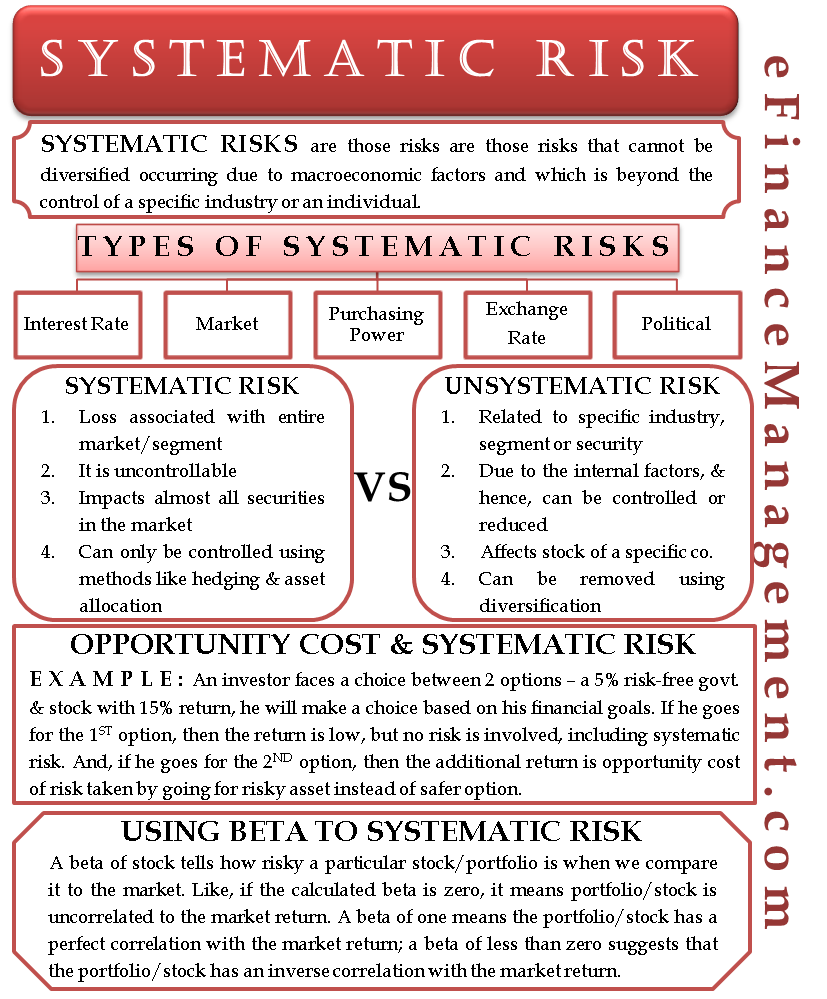
Systematic risk occurs due to macroeconomic factors. It is also called market risk or non-diversifiable or volatility risk as it is beyond the control… Read Article
Last Updated on: June 2, 2022
Advantages and Disadvantages of Payback Period (PBP)

Advantages and Disadvantages of Payback Period

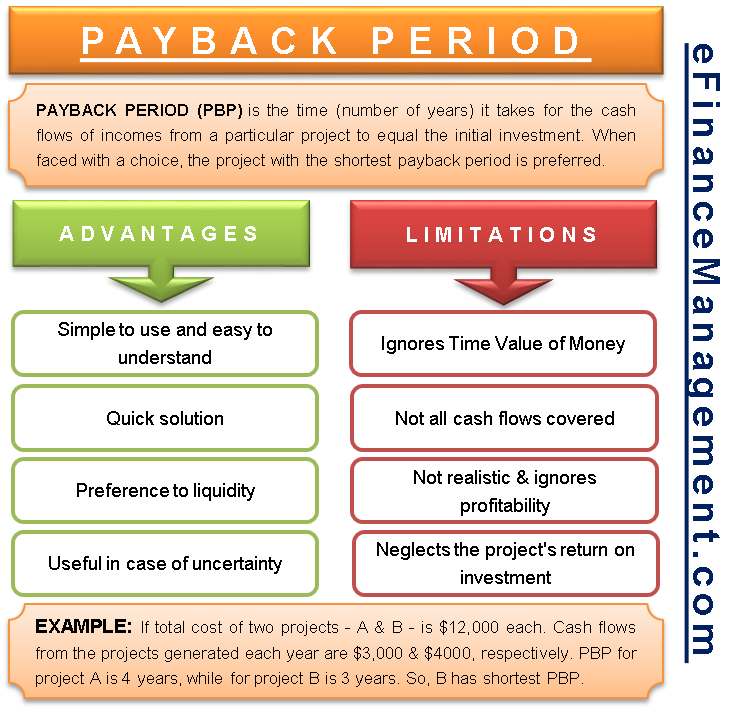
Business managers often face scenarios when they have to choose between projects. Such business decisions are very crucial as resources are limited. Thus, managers… Read Article
Last Updated on: June 2, 2022
Capital Budgeting Decisions

How can a Capital Budgeting Decision Go Wrong?

What is a Capital Budgeting Decision?Capital budgeting decision is the process by which companies make decisions pertaining to fund allocation for huge investment decisions.… Read Article
Last Updated on: June 2, 2022
Advantages and Disadvantages of Profitability Index

Advantages and Disadvantages of Profitability Index

The profitability index (PI) is a capital budgeting tool that helps decide whether to accept or reject a project. The formula of PI is… Read Article
Last Updated on: June 2, 2022
Older posts
Newer posts
← Previous Page1 … Page19 Page20 Page21 … Page27 Next →
+ Load More Articles
Generic selectors
Exact matches only
Search in title
Search in content
Post Type Selectors

Popular Posts

  • Difference between Financial and Management Accounting
  • Capital Structure and its Theories
  • Difference between Hire Purchase vs. Installment Purchase System
  • Investment Appraisal Techniques
  • Advantages and Disadvantages of Leasing
  • Capital Structure Theory – Modigliani and Miller (MM) Approach

Recent Posts

  • The Insolvency and Bankruptcy Code of India, 2016 (IBC, 16)
  • Financial Challenges Faced by Small Businesses
  • Purpose and Application of Options
  • Bargain Purchase Option in Lease: Meaning, How it Works
  • Dividend Recapitalization (With Example)

Categories

Financial Management Concepts In Layman Terms

  • About Us
  • Contact Us
  • Site Map
  • Terms of Use
  • Privacy Policy
  • Ethics & Diversity Policy
  • Publishing Principles
Copyright © 2009-2026 eFinanceManagement.com
Next Page »